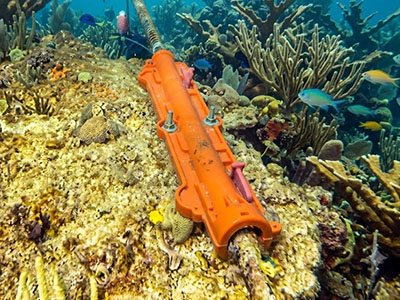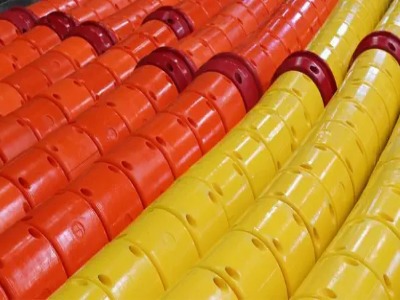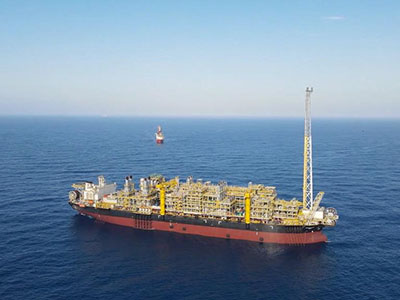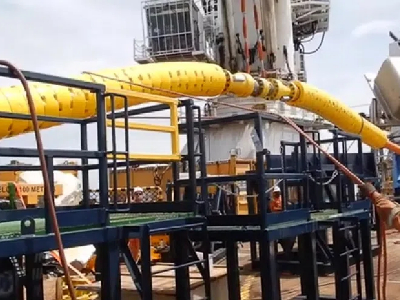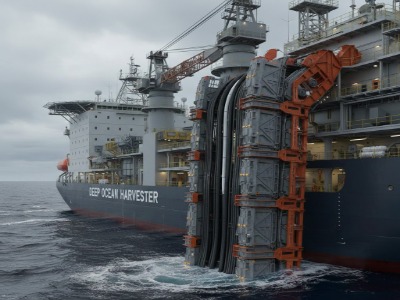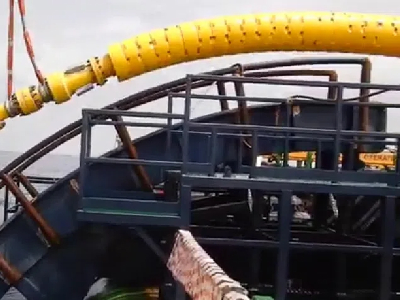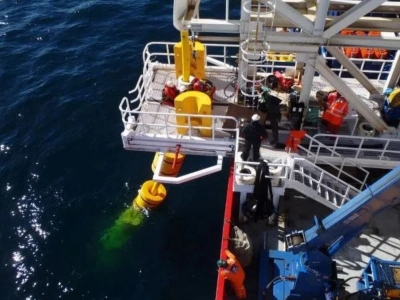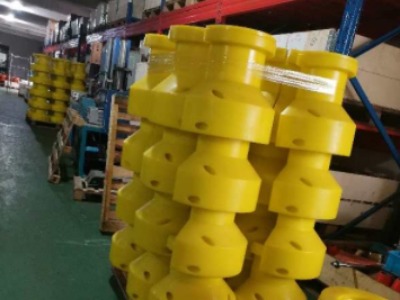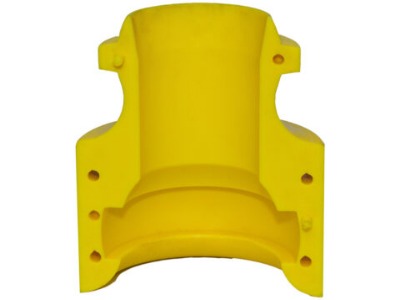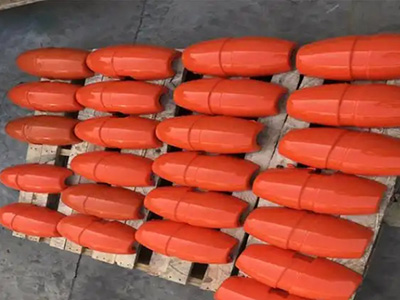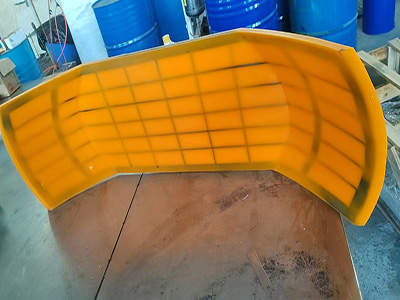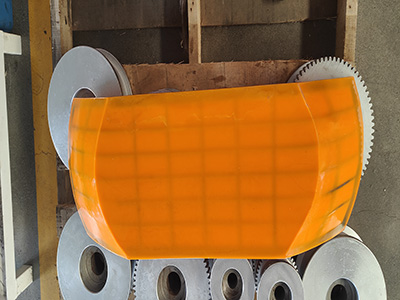
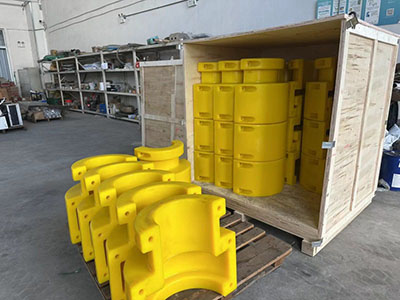
In deepwater operations where human diving is impossible, ROV performance relies entirely on the control umbilical. However, severe hydrodynamic forces cause extreme overbending and stress concentration at surface (LARS) and subsea (TMS) connection points—risking signal failure or total cable snapping. Polyurethane bend restrictors are modular, interlocking limpets designed to shield ROV umbilicals from overbending and structural fatigue at key termination points.

Core Advantages of Bend Restrictors for ROV Umbilical Cables
Relieving Stress Concentration at Rigid-Flex Interfaces: Where the ROV umbilical connects to rigid components like winches, A-frames, Tether Management Systems (TMS), or mechanical terminations, severe stress points occur. Wave action and ROV movement force the cable to bend repeatedly at these joint interfaces. Bend restrictors introduce a progressive stiffness gradient that distributes sheer stress across the restrictor string rather than concentrating it at a single point.
Locking Minimum Bend Radius (MBR) to Protect Signal and Power Lines: ROV umbilicals house sensitive fiber optics for video and control signals alongside high-voltage power lines. The interlocking elements of polyurethane bend restrictors are engineered to mechanically lock up once the cable reaches its designated Minimum Bend Radius. This mechanical stop prevents hyper-flexion, completely eliminating the risk of fiber optic breakage and internal conductor crushing.
Absorbing Dynamic Shock Loads During Launch and Recovery: Passing through the splash zone during Launch and Recovery System (LARS) operations subjects the umbilical to extreme side loads caused by vessel motion, sea swells, and ROV swaying. Constructed from high-toughness polyurethane, these restrictors act as heavy-duty shock absorbers, dampening lateral impacts and dynamic tension spikes.
Mitigating Fatigue Failure for Extended Subsea Operation: Work-class ROVs often operate continuously subsea for extended durations, leaving the umbilical exposed to persistent low-amplitude vibrations and micro-bending from ocean currents. By stabilizing the bend radius, bend restrictors minimize long-term metal fatigue in outer armored steel wires and prevent premature jacket cracking, drastically reducing costly downtime.
Facilitating Fast Onsite Assembly via Split-Shell Design: Featuring a bolt-secured design, our split shell polyurethane bend restrictors can be retrofitted or removed directly on site without severing the umbilical or dismantling the termination assembly.
Technical Specifications & Engineering Capability
Material: High-grade, marine-grade Elastomeric Polyurethane (resistant to biofouling, hydrolysis, and seawater corrosion)
Hardness Rating: Typically Shore 90A – 95A / Shore 55D – 65D (customizable based on water depth and dynamic loading)
Maximum Subsea Operating Depth: Rated up to 3,000m+ (Full ocean depth capability)
Fasteners: Marine-grade Stainless Steel 316 / Super Duplex / Inconel bolts
Customization: Tailored MBR (Minimum Bend Radius), internal diameter (ID) to match umbilical outer diameter (OD), and stiffness transition profile based on project-specific FEA (Finite Element Analysis).
Need a Custom Solution for Your ROV Umbilical Protection?
Standard sizes rarely fit specialized subsea operations. Contact our engineering team with your umbilical outer diameter (OD), minimum bend radius (MBR), and operating depth to receive a tailored 3D CAD design and quotation.
Contact us via your preferred channel. We provide 24/7 email support. Submit the form below, and we will answer your questions promptly.