1. Project Overview
Location: A major deepwater FPSO (Floating Production Storage and Offloading) field in the Gulf of Guinea, Nigeria.
Water Depth: 1.200m – 1.500m.
Background: After over 10 years of operation, In-Water Surveys (IWS) identified significant material fatigue at the bending "hard points" of the dynamic umbilicals connected to the floating platform. The original one-piece bend stiffeners had degraded, necessitating urgent replacement to prevent umbilical failure due to over-bending, which risks rupturing internal fiber optics or power units.
2. Core Challenges
Non-Interruption of Production: As Nigeria is a leading oil producer in Africa, daily output from core wells is critical. The operator mandated that remediation must not interrupt production, meaning cables could not be disconnected or re-terminated.
Extreme Environmental Loads: The Gulf of Guinea experiences long-period swells and powerful seasonal currents. The stiffeners must withstand high cyclic loading and maintain a 15-year design life.
3. Technical Solution: High-Performance Polyurethane Split System (SBS)
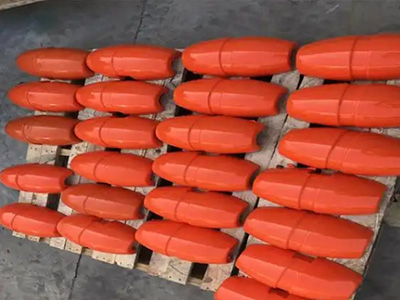
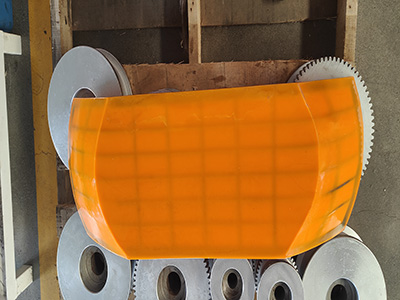
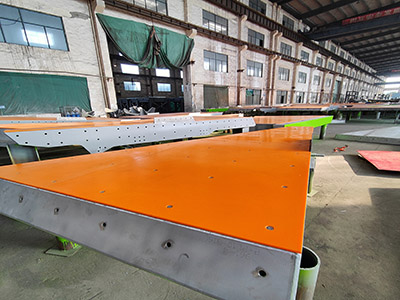
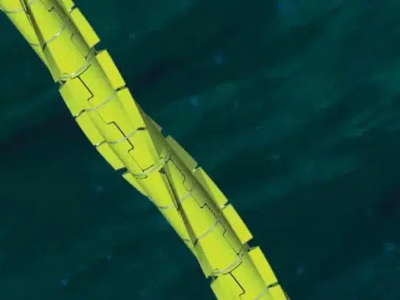
To meet the specific needs of this Brownfield project, the engineering team selected a Split Bend Stiffener (SBS) solution.
3.1 Enhanced Material Science
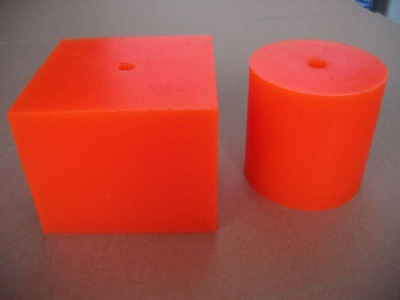
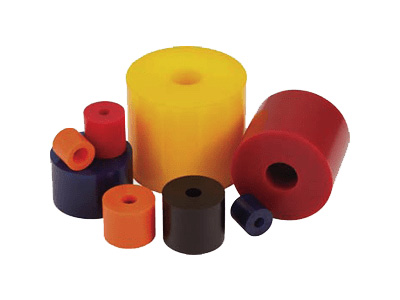
Hydrolysis-Resistant Polyurethane Elastomer: Given the high ambient water temperatures in Nigerian waters, a specialized hydrolysis-resistant polyurethane was used. This material maintains superior physical properties despite long-term immersion, preventing modulus degradation.
Structural Locking Technology: High-strength Super Duplex stainless steel longitudinal bolts were paired with a stepped locking interface. This ensures the two halves maintain mechanical integrity equivalent to a traditional one-piece structure under stress.
3.2 Dynamic Simulation and Fatigue Analysis
OrcaFlex software was utilized to model the local wave profile. Results demonstrated that the SBS, through its precise tapered stiffness gradient, successfully shifted stress concentration points from the connector root to the flexible section of the stiffener, increasing the umbilical's fatigue life by approximately 200%.
4. Implementation and Benefits
4.1 Offshore Installation Performance
Rapid Deployment: Replacing traditional one-piece stiffeners usually requires pulling the cable back to the deck and cutting it, taking 5–7 days. The split design allowed divers or Work-Class ROVs to wrap and lock the unit directly subsea, reducing deployment time to under 12 hours per unit.
Zero Production Loss: By eliminating the need to cut the cable, the entire installation was performed "online," saving the operator millions of dollars in potential deferred production.
4.2 Long-term Monitoring Feedback
An ROV inspection 18 months post-installation revealed:
Material Integrity: The polyurethane surface showed no strain-induced cracking or structural damage from marine growth (e.g., barnacles) common in Nigerian waters.
Displacement Control: Under strong currents, the stiffener maintained excellent centering, effectively limiting the curvature of the dynamic cable at the Touchdown Point (TDP).
5. Conclusion
In the deepwater sectors of Nigeria and globally, Polyurethane Split Bend Stiffeners have become the standard solution for Life Extension projects. By combining advanced elastomer technology with an efficient mechanical structure, they ensure the safety of dynamic assets while significantly optimizing Operating Expenditure (OPEX).
Contact Us
If you are planning a deepwater asset protection project in Nigeria or other regions, contact us!