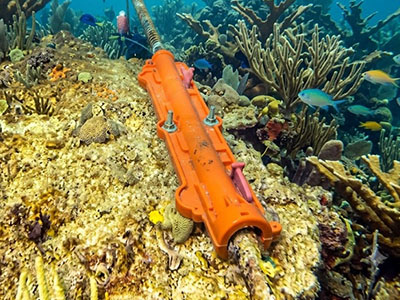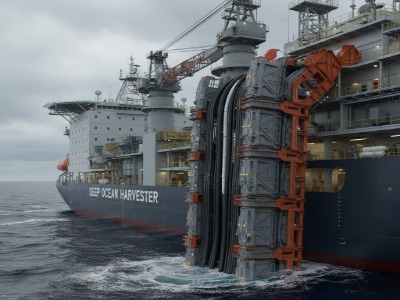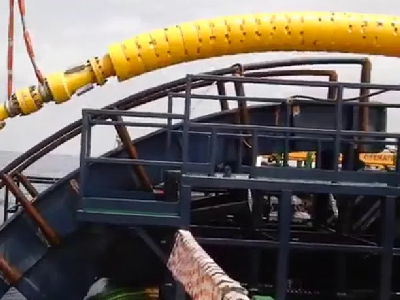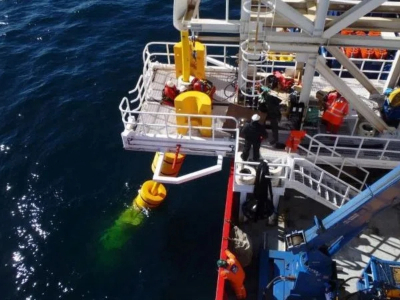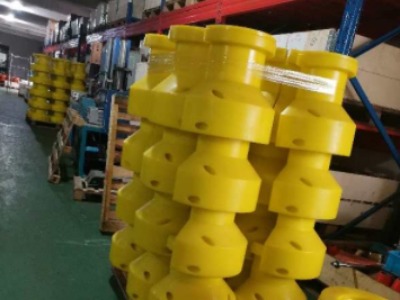
The Bend Stiffener is a critical protection system engineered to maintain the structural integrity of cables, umbilicals, and flexible risers in the most demanding marine environments. By preventing over-bending and mechanical fatigue at critical connection points, our system ensures the continuous, long-term transmission of power, data, and fluid across offshore energy systems.
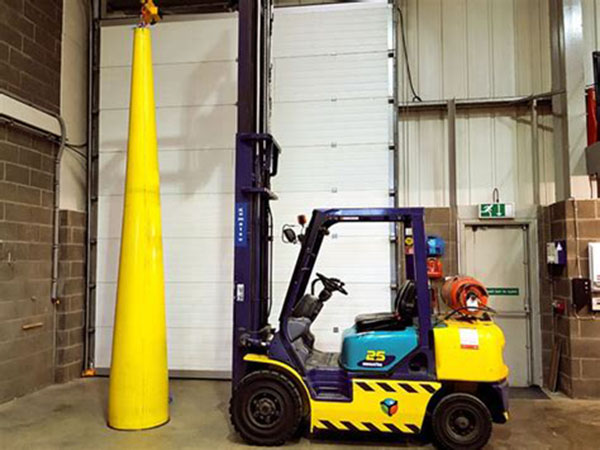
Core Functionality
A common misunderstanding in subsea protection is the scale of coverage. We engineer our Bend Stiffeners as high-precision "point protection" systems.
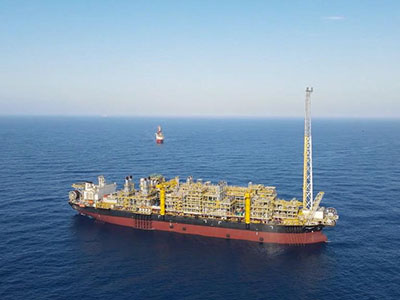
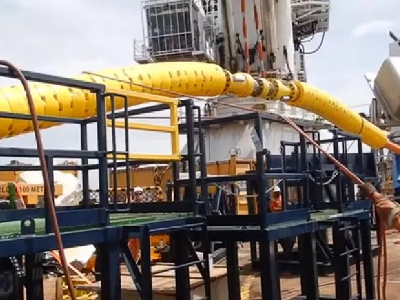
The Critical Interface: Their primary objective is to manage the stress concentration zone where a flexible line connects to a fixed structure (e.g., FPSO hang-offs or subsea terminations).
Controlled Stiffness Transition: The stiffener provides a gradual stiffness gradient, which prevents the line from exceeding its Minimum Bend Radius (MBR). This design ensures that when the line is subjected to dynamic loads—such as ocean currents, vessel motion, or platform heave—the bending stress is dissipated over a controlled, reinforced section rather than at a single point.
Design & Materials
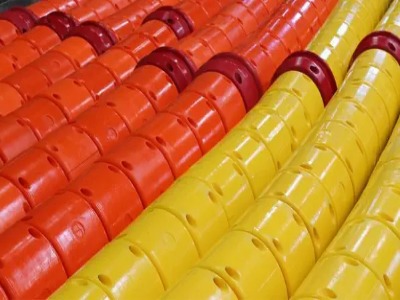
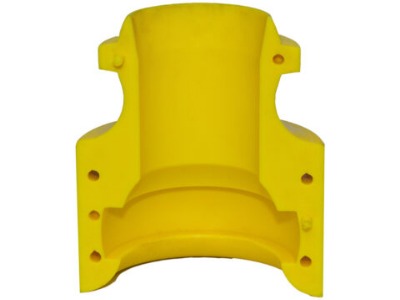
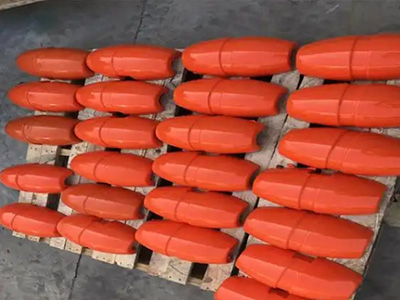
Our vertebrae and conical systems are designed for high-load durability and long-term subsea deployment.
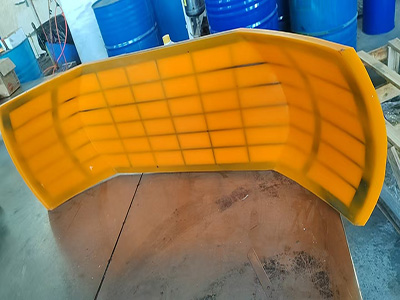
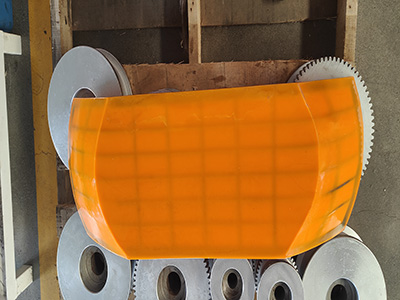
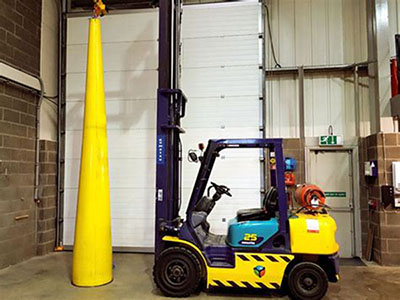
Interlocking & Conical Architecture: We utilize advanced geometry to provide high axial stiffness while maintaining the necessary flexibility for installation.
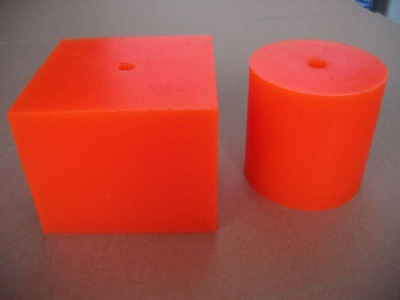
Performance Polyurethane: Our components are engineered from high-performance elastomeric polyurethanes, selected for the following properties:
Excellent Fatigue Resistance: They are capable of withstanding millions of bending cycles.
Seawater & Chemical Resistance: The material is designed for a 15–25 year service life despite constant saltwater immersion.
Energy Absorption: Our stiffeners effectively dissipate dynamic offshore loads.
Applications
Our bend stiffeners are essential for global energy infrastructure:
Offshore Oil & Gas: They support deepwater drilling risers, pipeline infrastructure, and subsea well intervention.
Renewable Energy: We provide protection for dynamic cables in floating wind turbines and subsea inter-array connections.
Custom Engineered Solutions
We understand that every subsea project presents unique installation requirements and environmental challenges. As a specialized Custom OEM Manufacturer, we do not provide "one-size-fits-all" solutions.
Our engineering approach includes:
Tailored Geometry: Rather than standardizing by length, our engineering team designs components based on your specific MBR, umbilical stiffness, and operational deflection angles.
Design Optimization: From initial FEA (Finite Element Analysis) support to precision manufacturing, we tailor the geometry to ensure the transition between the rigid termination and the flexible cable is seamless.
Precision Manufacturing: We offer bespoke solutions tailored to your umbilical diameter, project depth ratings, and specific material requirements.
Whether you require design optimization for a new offshore project or a specific manufacturing build, our team is ready to provide the technical support and precision-manufactured components your operations demand.
Contact us via your preferred channel. We provide 24/7 email support. Submit the form below, and we will answer your questions promptly.