1. Introduction: The Critical Role in Deepwater Integrity
Executive Summary: Why centralizers are non-negotiable in marine environments (wellbore stability, zonal isolation, and life-of-well safety).
The "90% Rule": Explain why marine regulations/industry standards typically target >90% standoff ratios to prevent gas migration and cement channeling.
2. Primary Functions in Marine Environments
Zonal Isolation: Creating a uniform cement sheath to prevent cross-flow between formations.
Friction Management: Reducing drag during long-reach casing deployment in high-angle or horizontal sections.
Structural Protection: Preserving casing integrity against mechanical wear and galvanic/chemical corrosion.
3. Classification of Marine Centralizers
Type | Mechanism | Best For | Key Pros/Cons |
Solid Rigid | Fixed diameter solid blades | Vertical sections, high-load areas | High restoring force; limited passing clearance |
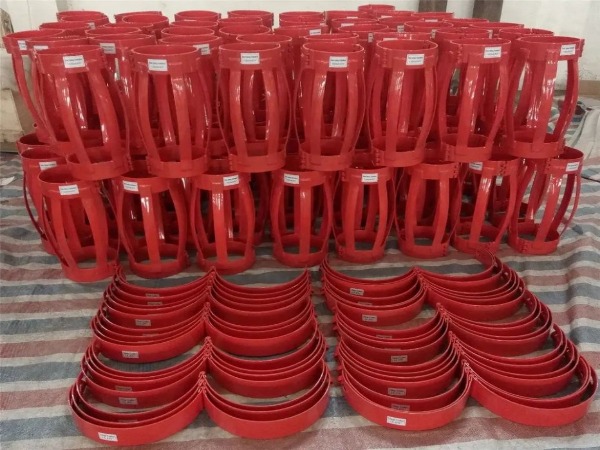
Bow-Spring | Deformable steel strips | Moderate deviations | Flexible passing; restoring force varies with borehole diameter |
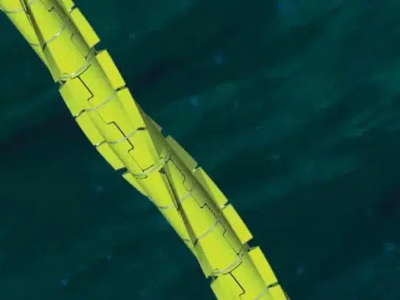
Spiral Blade | Helical solid blades | Extended-reach, horizontal wells | Enhances flow turbulence for better cement placement |
4. Technical Specifications & Material Selection
Restoring Force vs. Starting Force: Defining the balance between initial installation ease and long-term centering capability.
Material Metallurgy: Addressing the harsh marine environments.
Recommendation of materials (e.g., Duplex/Super Duplex Stainless Steel).
Fatigue Considerations: Managing stress induced by vessel heave and riser dynamics.
5. Selection Logic & Decision Matrix
Wellbore Geometry: Assessing dogleg severity (DLS) and clearance.
Fluid Dynamics: How spiral blades optimize cement slurry displacement efficiency.
Operational Constraints: Balancing casing weight against side force and torque.