Deep-sea mining represents the frontier of strategic metallic resource acquisition. Operating in extreme environments thousands of meters below the surface, the mining vessel serves as the offshore command hub. However, the riser and lifting systems connecting the vessel to subsea intermediate warehouses and mining vehicles face severe mechanical challenges. To withstand fatigue and loads induced by ocean currents, internal waves, and intense vessel motion, Bend Stiffeners, Bending Restrictors, and high-load Hang-off Systems have become the essential "guardians" of the system’s structural integrity.
I. Anchoring Technology at the Vessel Hang-off Point
The base of the mining vessel or the moonpool area serves as the primary load concentration point for the entire lifting system. The vertical lift hard pipe, spanning several kilometers and filled with mineral slurry, can reach a total weight of several hundred tons.
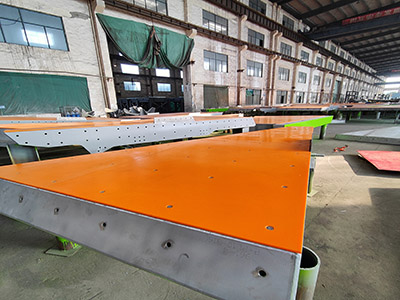
Technical Application: High-load Hang-off Systems.
Core Functionality: Beyond supporting static deadweight, these systems must provide motion compensation. By utilizing hydraulic units or universal gimbal seats, the system decouples the vessel’s rotational motion (roll/pitch) from the vertical riser string, preventing catastrophic bending moments at the hull interface.
Professional Requirements: Modern hang-off units are typically integrated with load-monitoring sensors to provide real-time tension data, preventing fatigue damage caused by resonance or extreme sea states.
II. Dynamic Stress Transition: The Application of Bend Stiffeners
At the vessel egress point and the interfaces of the Intermediate Warehouse, rigid structures meet relatively flexible piping. Due to Vortex-Induced Vibrations (VIV) and vessel displacement, these interfaces become "danger zones" where stress concentration is highest.
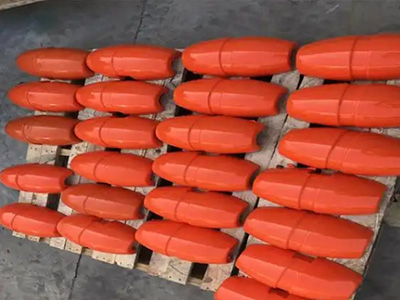
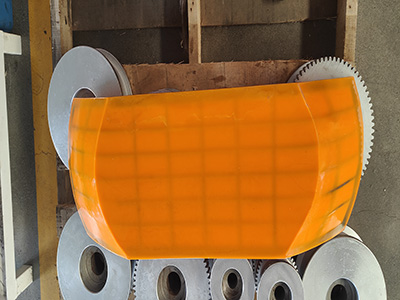
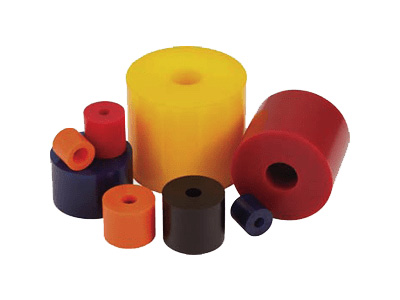
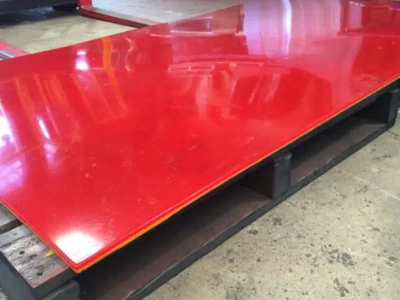
Product Selection: Conical Polyurethane Bend Stiffeners.
Mechanism of Action: Through a tapered design that gradually decreases in stiffness from the root to the tip, the stiffener provides incremental support to the pipeline. It effectively redistributes concentrated point loads over a longer section of the pipe, preventing fatigue failure at the connector root.
Key Characteristics: Utilizing specialized elastomer materials that are resistant to seawater corrosion and creep, these components ensure a service life of several years in high-pressure, deep-water environments.
III. Geometric Bending Control: Protection via Bending Restrictors
Unlike the rigid vertical risers, the flexible conveying hoses connecting the intermediate warehouse to the subsea mining vehicle often adopt a complex "Lazy Wave" or S-shaped configuration under the influence of currents.
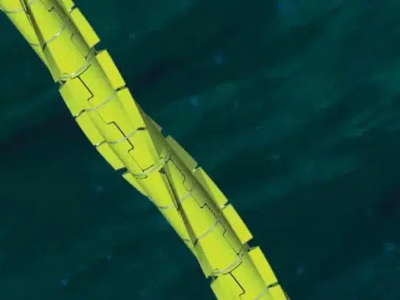
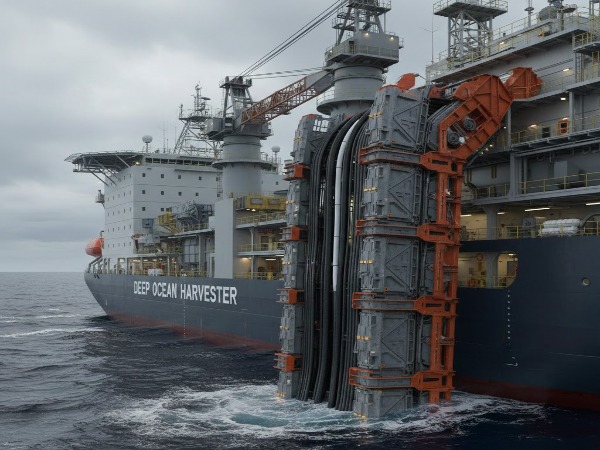
Technical Application: Interlocking Vertebrae-type Bending Restrictors.
Core Functionality: Flexible hoses often contain precision power cables and signal lines. The restrictor consists of a series of interlocking mechanical "vertebrae" that physically limit the pipe’s Minimum Bend Radius (MBR).
Application Scenario: When the mining vehicle traverses uneven seabed terrain or when currents overstretch the hose, the restrictor elements lock together mechanically. This "hard stop" prevents the hose from kinking or collapsing, protecting the internal conduits.
IV. System Integration and Digital O&M
Modern deep-sea mining vessels are increasingly integrating hardware with Digital Twin technology:
Fatigue Life Prediction: Sensors installed at hang-off points and bend stiffeners collect real-time dynamic load data.
Integrity Management: Periodic inspections via Remotely Operated Vehicles (ROVs) monitor the wear and tear of bending restrictors and other subsea components.
Conclusion
The complexity of deep-sea mining systems lies in the extreme environmental gradient from the sea surface to the abyss. Bend stiffeners provide a "flexible yet firm" transition; bending restrictors establish a "safety redline" for geometry; and hang-off systems act as the "anchor" for the entire operation. For vessel operators, precise selection of these components based on specific water depths and sea conditions is the engineering foundation for transitioning deep-sea mining from the "pilot stage" to "large-scale commercialization."