1. Project Background
As the Australian government pushes toward net-zero emissions, the Bass Strait, located between Victoria and Tasmania, has become a primary focus for deep-sea wind power development due to its world-class wind resources. The water depths in this region typically exceed 60 meters, and the area is subject to extreme sea states influenced by the "Roaring Forties."
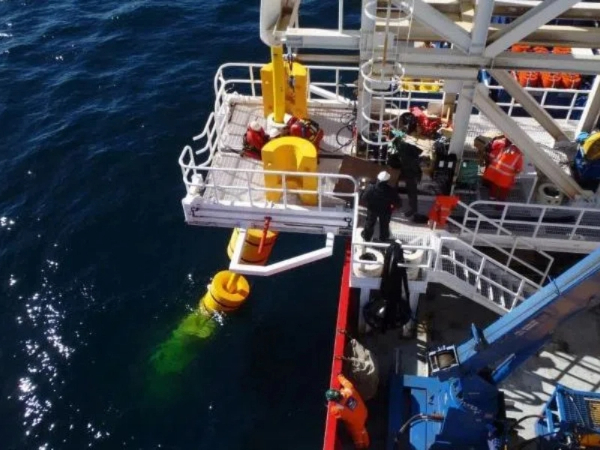
This case study explores the deployment of Distributed Buoyancy Modules (DBMs) to protect the dynamic cable systems connecting floating wind turbines within this project.
2. Challenges and Requirements
Extreme Sea States: Strong winds and heavy swells in the Bass Strait exert massive dynamic loads on flexible cables.
Ecological Protection: Australian maritime regulations are stringent; it is mandatory to prevent subsea cables from dragging across the seabed to protect benthic habitats.
Long-term Reliability: Given the high cost of deep-sea maintenance, subsea components must achieve a maintenance-free operational life of over 25 years.
3. Technical Solution and Material Selection
A customized DBM solution was developed to meet the specific demands of the Australian deep-sea environment:
High-Performance Material Configuration
High-Pressure Resistant Core: Closed-cell Polyurethane Foam (PU Foam) was utilized. Its density was precisely calibrated to withstand deep-water pressure and maintain long-term buoyancy, preventing cable sinking due to water absorption.
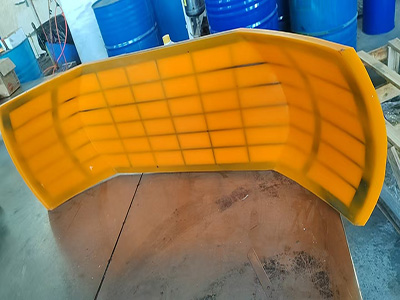
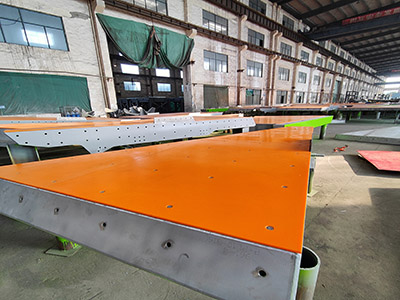
Reinforced Shell: To combat high salinity and biofouling in Australian waters, the outer shell is made of impact-resistant epoxy fiberglass (GRP) featuring an eco-friendly anti-fouling coating.
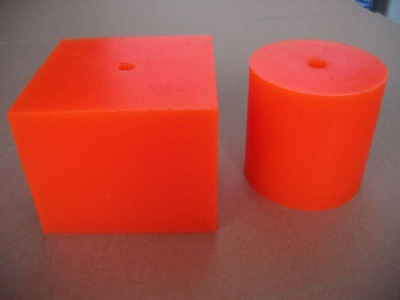
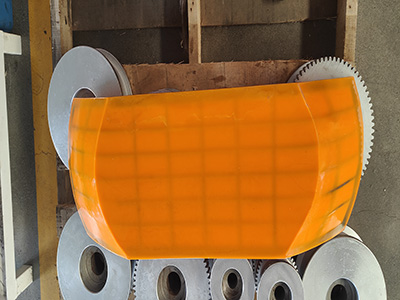
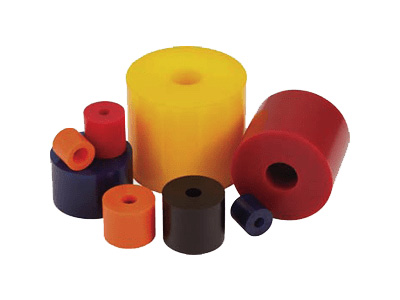
Flexible Protection: A polyurethane elastic liner was used at the contact interface between the DBM and the cable to absorb micro-vibrations caused by ocean currents, protecting the cable sheath from compression damage.
Modular Structural Design
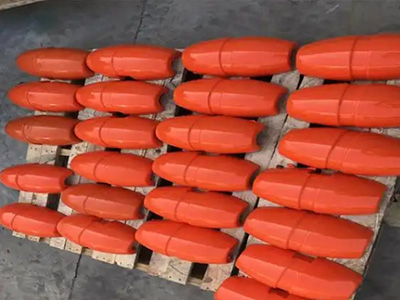
Rapid Installation: The semi-circular arc bolt-on structure utilizes corrosion-resistant titanium alloy fasteners. This allows offshore crews to quickly lock the modules onto specific cable segments based on the turbine's range of motion.
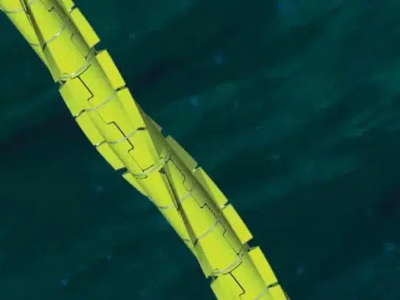
Geometric Optimization: The engineering team used simulations to implement a Lazy Wave configuration. This specific geometry effectively absorbs the displacement of floating turbines during extreme storm events.
4. Key Application Scenarios
4.1 Dynamic Cable Catenary Section
When connecting floating foundations to the subsea collector array, DBMs support the cable in an "S" shape. During heavy swells from the Southern Ocean, this flexible profile acts as a "spring," significantly reducing tension at the cable interfaces.
4.2 Crossing Complex Deep-Water Terrain
Parts of the Bass Strait feature rugged, rocky seabeds. DBMs help the cable form a transition section (take-off part) as it approaches the floor, keeping the cable suspended and completely eliminating abrasion caused by current-induced friction against the seabed.
4.3 Floating Substation Interface
The large-scale floating substations in the project use DBMs to regulate the entry angle of the cables. Integrated anti-slip grooves ensure the modules remain stationary in high-current zones, guaranteeing the stability of power transmission.
5. Project Outcomes
Extended Lifespan: Through load optimization provided by the DBMs, the fatigue life of the dynamic cables is projected to increase by over 30%.
Operational Efficiency: The modular design reduced subsea deployment time, lowering the daily costs associated with high-spec cable-laying vessels.
Eco-Friendly Design: The project successfully achieved "non-contact" cable crossings over the seabed, aligning with Australia's strict environmental guidelines.
6. Conclusion
In Australia’s transition toward deep-sea wind energy, Distributed Buoyancy Modules (DBMs) are more than just auxiliary components; they are the core safety barrier for power transmission systems. As more offshore wind concessions are granted across the region, high-performance DBM technology will become a critical link in the local green energy supply chain. "Optimize Your Offshore Connectivity Today" Ensure the longevity of your subsea cable systems with our field-proven DBM solutions. Contact our engineering team for a customized buoyancy analysis and project consultation. [Get a Professional Quote]