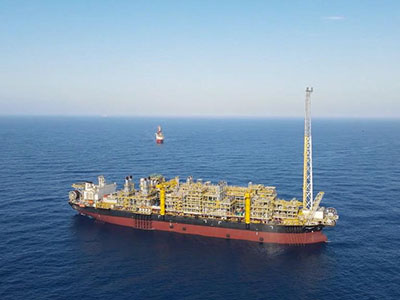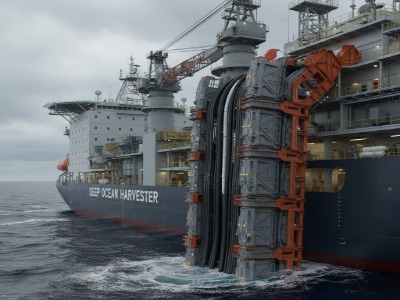
As global offshore wind transitions from fixed-bottom nearshore sites to deep-water areas exceeding 60 meters, Floating Offshore Wind is rapidly evolving from commercial demonstration to utility-scale development. However, once freed from the rigid constraint of the seabed, the massive floating structures towering in the ocean face far more severe environmental challenges.
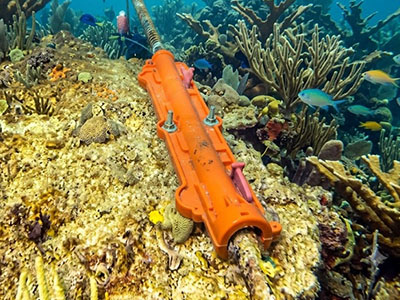
In this shift, a technical module long regarded as an "auxiliary component" has been thrust into the spotlight: the Dynamic Cable Protection System (Dynamic CPS).
If static subsea cables are the "veins" laid on the seabed, dynamic cables are the "nervous system" suspended in the water column—connecting swaying floating turbines to seabed junction boxes. Protecting this vital power artery against millions of bending, tensile, and torsional cycles over a 25+ year operational lifespan represents an ongoing engineering breakthrough spanning naval architecture, materials science, and fluid dynamics.
1. From "Static" to "Dynamic": A Paradigm Shift in Deep-Sea Stress Environments
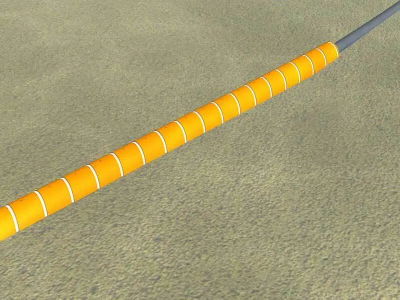
Cable protection logic for traditional fixed-bottom offshore wind is relatively straightforward: cables are shielded from current scour and anchor drag by rock placement or trenching beneath the seabed, combined with bend restrictors fixed to the monopile foundation.
Floating offshore wind disrupts this static equilibrium.
Under combined wind, wave, and current loads, semi-submersible or Spar floating platforms experience motion across six degrees of freedom (surge, sway, heave, roll, pitch, and yaw). Cables connected beneath the floater are no longer static; they remain in a continuous state of dynamic suspension.
This physical environment introduces three critical engineering challenges:
Stress Concentration at Topside Interfaces: As the floating structure moves, the cable connection at the platform base endures severe alternating bending moments. Without adequate buffering, cables risk fatigue failure within a short timeframe.
Fatigue Accumulation Under Multiaxial Mechanics: Suspended in the water column, the cable simultaneously experiences bending, tension, and Torsion. According to S-N fatigue curves, this three-dimensional multiaxial stress accelerates metal fatigue in internal high-voltage copper conductors and optical fibers.
Vortex-Induced Vibrations (VIV): When strong ocean currents pass across suspended dynamic cables, vortex shedding occurs periodically on the downstream side. This induces high-frequency, low-amplitude vortex-induced vibrations that inflict microscopic structural damage on protective sleeves and cable sheaths.
2. Core Engineering Solutions Supporting Dynamic CPS
To overcome dynamic fatigue challenges in deep water, ocean engineering has achieved critical advances across line configuration design, transition structure engineering, and polymer materials.
Breakthrough 1: Hydrodynamic Optimization via the Lazy Wave Configuration
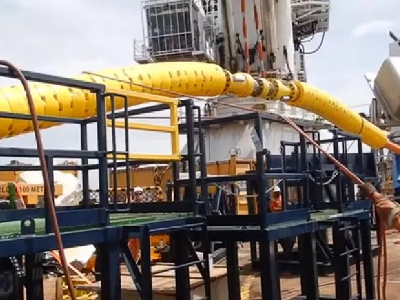
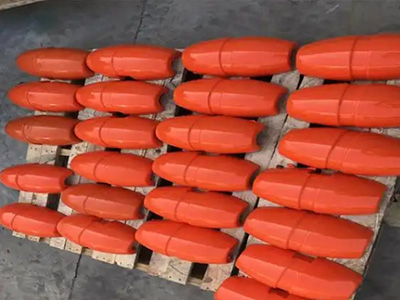
To prevent cables from hanging vertically from the floater to the seabed—which subjects the touchdown point to destructive tension—engineers use a combination of buoyancy modules and ballast weights to shape the cable into an "S-curve" in the water, known as the Lazy Wave configuration.
This geometric configuration functions like a massive underwater spring. The dynamic displacement caused by platform movement is largely absorbed through the elastic deformation of the S-shaped arch, significantly reducing tension at both the Touchdown Point (TDP) and the topside interface.
Breakthrough 2: Gradual Stiffness Transition — Dynamic Bend Stiffeners (DBS)
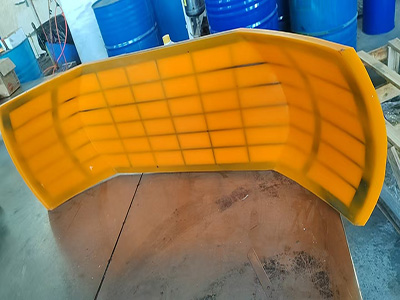
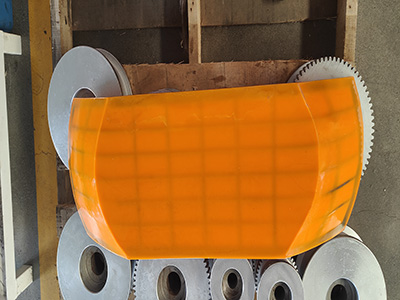
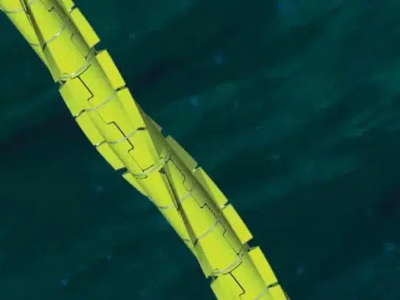
At the platform interface, segmented bend restrictors are replaced with continuous conical Dynamic Bend Stiffeners (DBS). Manufactured as a single-piece cast from high-elasticity polyurethane, the DBS features a tapered geometry (thicker at the top, thinner at the bottom). Its role is to provide a gradual stiffness transition from the rigid steel platform structure to the flexible subsea cable, preventing stress concentrations.
Breakthrough 3: Hydrolysis-Resistant Polyurethane Formulations
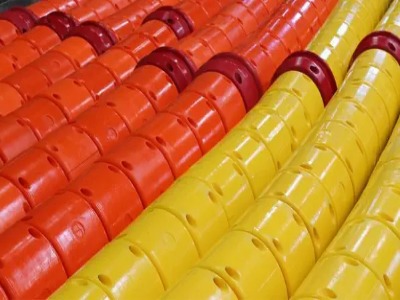
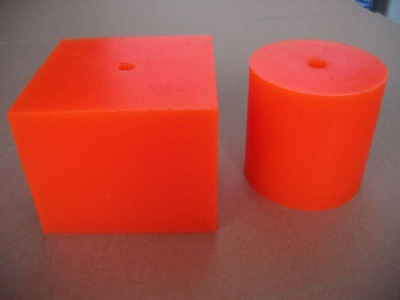
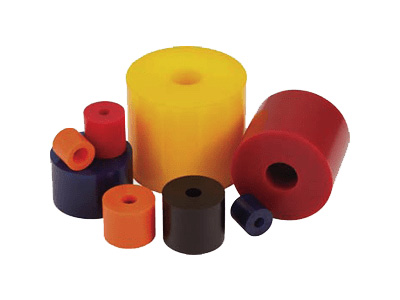
Over a 25-year operational lifespan, dynamic CPS sleeves must endure chemical seawater corrosion, continuous friction, and fretting wear. Next-generation dynamic CPS units predominantly employ castable polyurethane (PU).
Fatigue Resistance: By optimizing the molecular chain segments of polyols and isocyanates, the material maintains high elastic recovery rates even after millions of cyclic tension tests.
Hydrolysis and Abrasion Resistance: It preserves Shore hardness stability under long-term seawater immersion while resisting abrasive wear caused by suspended sediment in ocean currents.
3. Outlook: Standardization and Commercial Scale-Up in Deep Water
As global floating offshore wind transitions from megawatt-scale demonstration projects (such as Hywind Tampen and Kincardine) to gigawatt-scale (GW) commercial wind farms, Dynamic Cable Protection Systems are evolving from expensive, customized components into modularized, standardized industrial products.
Conquering deep waters requires not only larger turbine hubs and more stable floaters, but also relies heavily on these submerged engineering details. The technical advancement of Dynamic CPS provides both a secure power transmission artery for deep-water wind turbines and a solid engineering foundation for the global green energy transition.